
The Art of Translating Cultural Nuances in Literature
TRANSLATION
Carolina Correa
3/26/20255 min read

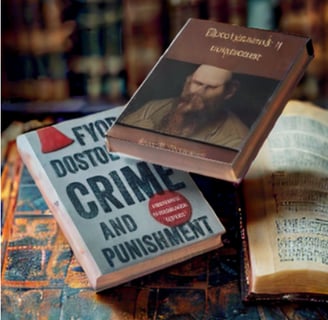
Translation is more than a simple transfer of words from one language to another; it’s a profound act of transformation. It is a bridge connecting worlds, a delicate puzzle that requires both skill and artistry. When we translate literature, we are not just converting text, we are reshaping meaning, preserving emotions, and maintaining the cultural heritage embedded in the work. Translation balances faithfulness and reinvention, making it an art form in its own right.
The beauty of translated literature is that it opens doors to new worlds. It allows readers to experience stories, perspectives, and voices that would otherwise remain hidden. Without translation, literature from distant corners of the world would be inaccessible, leaving us with a very limited understanding of human experiences across cultures. Translation, therefore, transforms literature into a shared experience, transcending borders and connecting readers around the world.
But this leads to a timeless question: “Can a translation ever truly be faithful to the original, or is it always an interpretation?”
When an author writes, they infuse their work with cultural nuances, elements shaped by their upbringing, worldview, and the society they belong to. These nuances are reflected in the language they choose, the historical events they reference, and even the way characters interact with one another. All these details form the foundation of the story, adding richness, depth, and authenticity.
However, these very nuances can often be lost or distorted when a text is translated. A word-for-word translation usually fails to capture the subtleties that make a narrative impactful. Direct translations may struggle to preserve the emotional weight of certain phrases, leaving behind a flat or diluted version of the original text. As much as we might want a translation to be exact, the reality is that the cultural context behind words and expressions can’t always be transferred perfectly across languages.
The Invisible Hand of the Translator
The role of a translator goes far beyond merely swapping words from one language to another. They must act as cultural interpreters, bringing the heart of the original text to life for a new audience. A skilled translator doesn’t just reproduce the author’s words, they work to preserve the meaning, tone, and nuances of the original work. They must understand both the source and the target language deeply, along with the cultures they represent, in order to translate not just language but the very essence of the story.
Small shifts in phrasing, structure, or word choice can have a profound impact on the tone and message of a story. Even seemingly minor changes can influence how emotions are conveyed and how characters are perceived by readers. Take, for example, a word in one language that carries strong cultural connotations. When translated, that word might lose its significance or take on an entirely different meaning in another language. These shifts are inevitable, and the translator’s job is to ensure that the story’s integrity remains intact, even as it is adapted to a new cultural context.
Translation is often compared to a tightrope walk, one where the translator must balance on the thin line between staying true to the original text and adapting it to resonate with a different audience. It’s not just about getting the words right; it’s about getting the feeling of the story across in a way that honors the original but also makes sense within the new context.
The voice of the author flows through the translator, yet is reshaped, reimagined, and brought to life in a new form. The essence of the story remains unchanged, but it is reborn in a new cultural context. Translation is, in essence, an act of creation.
Beyond Word-for-Word: The Art of Interpretation
In this light, it becomes clear that translation is always an interpretation. No matter how closely a translator may follow the original text, their personal understanding of language and culture will influence the choices they make. It is impossible to translate everything exactly as it appears in the original because languages and cultures are inherently different. In this sense, translation is an artistic act as much as it is a technical one.
A translator’s creativity and perceptiveness are crucial. They must not only convey the exact meaning of words but also capture the emotions, the tone, and the underlying messages that may not be immediately obvious. A translator is an artist, shaping the text to ensure that it speaks to readers in a way that feels authentic to the original while still accessible to a new audience.
For example, when translating a work from a language that has rich cultural references, the translator may need to provide additional context or modify certain elements to ensure the meaning is understood. The beauty of a phrase or metaphor in one language might simply not exist in another, and so the translator must find a way to evoke a similar response in the new language.
The translator must also be sensitive to the emotional undertones of the text. What works in one language may not carry the same weight or resonance in another. A word that feels poignant in the original language might sound flat when translated directly. This is where a translator’s skill comes into play — they must recognize when to stray from a literal translation to better capture the emotional truth of the story.
Can a Perfect Translation Exist?
As we consider the complexities of translation, it’s natural to wonder: Can a perfect translation ever exist? The truth is, no two languages are ever perfectly aligned. Every language has its own unique set of expressions, idioms, and cultural references that cannot always be directly translated into another. Because of this, a translation is always, in some way, a compromise.
However, rather than aiming for word-for-word fidelity, the goal of translation should be to capture the essence, emotion, and intent of the original work. A successful translation is one that resonates with a new audience, making the story feel as alive and powerful in the target language as it did in the original. It is an act of adaptation, a reimagining of the text that honors the original while allowing it to evolve and thrive in a new cultural context.
Translation, therefore, is not just about transferring words; it’s about connecting cultures, fostering empathy, and creating a shared experience. It allows us to step into the shoes of someone from a different background, to see the world through their eyes, and to understand their experiences. It helps us recognize the common threads that bind us all together, even as we celebrate the differences that make each culture unique.
In conclusion, translation is an evolving art — one that requires both technical skill and creative intuition. While we may never achieve a perfect translation, the art of translation allows stories to cross borders, letting them thrive in new languages, cultures, and contexts. Rather than replacing the original work, translation enriches it, adding new layers of meaning and interpretation. As we continue to bridge cultures through language, we ensure that stories are passed down, not just as words on a page but as living, breathing entities that transcend time and place.
CAROLINA CORREA
Expert writing services for effective communication.
GET IN TOUCH
+55(54)981130909
© 2025. All rights reserved.
SERVICES
Copywriting
Creative Writing
Blog Writing
Web Writing
Translation